
Psytrance

Transformations on the Dancefloor - The Sound Design of Psytrance
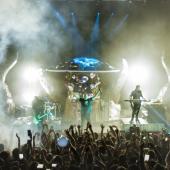
When a Goa-party reaches its peak, an energy field is created on the dance floor, which is not visible, but perceptible for everyone involved. The perception focuses on the moment, the bodies move to the rhythm of music in a relaxed way. What characteristics are typical for this music that let so many people globally become ecstatic?
Goa trance had its heyday in between 1994 and 1998. The music style then evolved under the name Psytrance. Psytrance is produced entirely electronic, with constant uniform rhythms (4/4) and psychedelic sounds. Although “Goanauten” do not like to hear this, psytrance is a subgenre of techno and differs from other techno styles mainly due to the comparatively high proportion of melodic elements and by the special ornamentics of the sound effects used. Psytrance therefore appears much more playful and organic.
The speed of psytrance is around 130-160 bpm. Here, the beats per minute are based on the heartbeat. Even by this means, a special energy is created to the dance floor.
In psytrance oftentimes samples based off instrumental sounds are interlaced, such as the Indian stringed instrument Tanpura. Additionally, samples from nature or monk chants are used. For this reason we perceive psytrance as multicultural, oriental or Indian. Often creaking doors or bubbling sound effects are incorporated in order to obtain psychedelic effects in music. Sounds from science fiction films are reminiscent of echoing, electronic sounds. In addition to the rhythms and noises also elongated spheres and melodious harmonies are developed in psytrance, which set a positive sentiment and a special atmosphere, which can temporarily be perceived as mystical and which can also produce an altered state of consciousness or trance itself to the steady rhythms.
More Questions and Answers About Psytrance
Q: What is psytrance, and how does it differ from other music genres?
A: Psytrance, short for psychedelic trance, is a subgenre of electronic dance music characterized by fast rhythms, complex basslines, and the use of psychedelic sounds. Unlike traditional trance, which has a more polished aesthetic, psytrance emphasizes the raw and experimental nature of the sound. It distinguishes itself from other genres such as techno through its higher BPM (beats per minute) – typically around 145 – and the use of “offbeat” basslines and “acid” sounds. Psytrance emerged in the late 1990s within the Goa and psychedelic trance scenes and has since gained a global following. The music is often paired with psychedelic visuals and light shows at festivals and raves. The lyrics are usually minimal or nonverbal, allowing listeners to fully immerse themselves in the hypnotic and trance-like musical experience. Psytrance artists enjoy experimenting with various styles and sounds, ranging from dark and intense atmospheres to playful and euphoric melodies. Well-known artists and producers in the psytrance scene include Infected Mushroom, Astrix, Vini Vici, and Ajja.
Psytrance is more than just music – it is a cultural movement that emphasizes freedom, spirituality, and community.The scene is known for its open and peaceful atmosphere, where people from different backgrounds and nationalities come together to dance and experience the transformative power of music.
Q: What role do local events and dance floors play in the psytrance scene?
A: Local events and specialized dance floors are central to the psytrance community. They provide a platform for DJs and live acts to showcase their music and serve as a gathering place for the scene. Floors dedicated to psytrance can be found worldwide and range from small, intimate gatherings to large festivals. These events are not just musical gatherings; they often incorporate visual art, decoration, and a connection to nature, making them a holistic experience. The events offer attendees the opportunity to express themselves freely, dance, meditate, and simply be themselves. The community that forms at these events is often very strong and supportive. Many people find lifelong friends here and are drawn to the positive energy and openness of the psytrance scene.
The music at these events ranges from slow, meditative sounds to fast, energetic beats. There are many different styles and subgenres of psytrance played on the dance floors. The DJs and live acts take attendees on a journey through soundscapes, creating an unforgettable experience.
In addition to the musical aspects, the visual effects and decorations are also an important part of the events. Many events feature elaborate light shows, colorful decorations, and art installations that stimulate the senses and create a special atmosphere. Overall, local events and specialized dance floors are an indispensable part of the psytrance community. They foster creativity and a sense of community, and provide a safe space for people seeking something extraordinary. Anyone who has experienced the magical atmosphere of a psytrance event will want to return again and again.
Q: What are the origins of psytrance?
A: The origins of psytrance can be traced back to the Indian state of Goa in the late 1980s and early 1990s. There, travelers from all over the world gathered to party on the beach, where electronic music with a psychedelic character was played. These parties became known as Goa parties, and Goa trance evolved into a genre of its own. It was heavily influenced by the psychedelic culture scene, the use of LSD and mushrooms, and spiritual shamanism. Goa trance was characterized by fast BPMs, repetitive melodies, flowing synthesizer sounds, and hypnotic rhythms. The lyrics were often spiritual and mystical, dealing with expanded consciousness and spiritual enlightenment.
As Goa trance grew in popularity, the scene spread to other parts of the world, particularly to Europe. In the 1990s, artists began to further develop the Goa sound and experiment with it, which ultimately led to the emergence of psytrance.
Psytrance combines elements of Goa trance with influences from other electronic music genres such as techno, house, and ambient. It continues to be strongly influenced by psychedelic culture and spiritual awareness, but there is also a greater variety of styles and subgenres within the psytrance scene.
Today, psytrance is a globally popular music genre that is played at major festivals and has given rise to a vibrant and diverse community of fans, artists, and event organizers. Although the sound has evolved over the years, the essence of psytrance remains rooted in spirituality and the pursuit of a transcendent experience through music and dance.
Q: How has psytrance evolved since its origins?
A: Since its origins in Goa, psytrance has evolved and diversified enormously. Various subgenres have emerged, including progressive trance, dark progressive, full-on, and psychedelic rock, all of which feature different musical elements and energy levels. This evolution reflects changes in technological capabilities and cultural influences. Nevertheless, the genre’s core aesthetic—rooted in psychedelic experience and community—remains intact. Psytrance is known for its hypnotic and repetitive melodies, pulsating basslines, and energetic beats, which can transport listeners into a trance-like state. DJs and producers in this genre often use complex sound effects and samples to create an immersive and psychedelic atmosphere.
Visual effects are also a key element of psytrance events, often combined with light shows, visuals, and decorations to create a multidimensional experience. These events can take place in clubs, at festivals, or at outdoor venues and often attract a diverse and enthusiastic crowd.
Psytrance has a loyal fan base worldwide, characterized by its openness to new experiences, love of music, and connection to nature. The genre has made a unique contribution to the electronic music landscape and will continue to inspire new artists and fans.
Q: What is the difference between Goa trance and psytrance?
A: Although Goa Trance is often used as a synonym for Psytrance, there are differences between the two. Goa Trance emphasizes melodic elements, spiritual themes, and strong Indian or Eastern musical influences. Psytrance, on the other hand, tends to focus more on the technical aspects of production and emphasizes rhythmic components, experimental sounds, and a broader range of influences. Goa Trance can be seen as the root of Psytrance, from which other subgenres later developed. Both genres emerged in the late 1980s and early 1990s within the hippie and trance scene in Goa, a popular destination for partygoers and ravers. Goa Trance was often referred to as “Spiritual Trance” and was closely associated with the Goa Spirit movement, which was known for its peacefulness, spirituality, and openness to different cultures and musical styles.
Psytrance, on the other hand, has evolved into a broader and more diverse musical genre that is constantly evolving and has given rise to various subgenres, such as Dark Psytrance, Full-On, Progressive Psytrance, and Hi-Tech. Psytrance parties are known for their energetic atmosphere, psychedelic visuals, and avant-garde music production.
Although the subgenres and styles have evolved over the years, Goa Trance and Psytrance remain popular genres in the electronic music scene and can be found at festivals around the world. Both genres have a loyal fan base and are cherished and further developed by DJs and producers from all over the world.
Q: Why does decoration play an important role at psytrance events?
A: Decor is an essential part of psytrance events, as it helps create an immersive experience. The visual aesthetic, often inspired by nature, spirituality, and psychedelic art, helps participants disconnect from their daily lives and fully immerse themselves in the experience. Elements such as vibrant colors, geometric shapes, and thematic installations enhance the sense of unity with the music and the community and foster an atmosphere of freedom and creativity. Decorations can take various forms, including colorful fabrics, LED lights, glowing balls, mandala wallpaper, fluorescent artwork, and large, elaborate installations such as floating decorations. Special effects like fog machines and laser light shows may also be used. These elements contribute to the overall experience and create a unique and magical environment for attendees.
The decor at psytrance events is often designed to be interactive, giving participants the opportunity to engage with the artwork – whether by waving scarves, dancing around installations, or painting on collaboratively designed canvases. This interaction fosters a sense of connection and shared creation, which is an important part of psytrance culture.
Overall, the decor therefore plays a crucial role in creating an atmosphere that encourages participants to express themselves freely, connect with one another, and embrace a transformative and mind-expanding experience. Through the combination of music, art, and community, Psytrance culture is celebrated in a unique and creative way.
Q: What does the term “Full On” mean in the context of psytrance?
A: “Full On” is a subgenre or style of psytrance characterized by a very energetic, positive, and often melodic sound. Full On is typically played in the early morning hours at festivals or parties to keep the energy on the dance floor going. The music has a powerful, driving rhythm and often features emotional melodies, dynamic basslines, and striking atmospheric effects. The tracks are often very melodic and catchy, making it easy for listeners to connect with the music and enter a trance-like state. Full On is known for its positive vibes and its ability to bring people together to share an unforgettable experience.
Artists such as Astrix, Vini Vici, Infected Mushroom, and Electric Universe are some of the best-known representatives of Full On Psytrance. They have shaped the scene and spread their musical influence around the world.
Overall, Full On Psytrance is a powerful and energetic form of electronic music that brings people from all over the world together to celebrate and dance. It is a form of music that inspires listeners to move, connect, and enjoy life to the fullest.
Q: To what extent does the use of psychedelics play a role in the psytrance scene?
A: The use of psychedelics is historically and culturally closely linked to the psytrance scene, as the music and events are often geared toward inducing psychedelic experiences. Substances such as LSD and mushrooms are used by some participants to intensify their musical and sensory experiences. Nevertheless, it is important to emphasize that drug use is not practiced or promoted by everyone within the scene, and that attending psytrance events remains a personal choice that can be enjoyed without the influence of drugs. Psychedelics are often viewed within the psytrance scene as a tool to promote expanded consciousness, spiritual experiences, and creative expression. Some artists and event organizers actively advocate for the safe and responsible use of drugs by providing education and promoting harm-reduction measures.
It is important to emphasize that the use of psychedelics is not without risks and that each person should respect their own limits and make informed decisions. There are many ways to enjoy the music and atmosphere of psytrance events even without using drugs.
Ultimately, the psytrance scene is diverse and offers space for individual experiences and perspectives. It is important to show respect and tolerance for different lifestyles and choices within the scene in order to foster a positive and inclusive atmosphere.
Psytrance Events and Their Global Appeal
Psytrance, a form of electronic music that originated in the late 1980s, is characterized by fast beats, complex basslines, and an often spiritual or psychedelic atmosphere. Over the past few decades, this high-energy genre has fostered a significant global community that gathers annually at numerous festivals and events around the world. But what makes psytrance so special, and how does it differ from other music genres? This article delves deep into the world of psytrance and explains why this genre and its events hold such a magnetic appeal.
What is psytrance, and how does it differ from other music genres?
The Origins and History of Psytrance
Psytrance has its origins in Goa trance, a genre that emerged in the late 1980s and early 1990s on the beaches of the Indian state of Goa. Goa, a melting pot of diverse cultures and musical influences, became the birthplace of a new form of psychedelic music. Goa trance combined elements of traditional psychedelic rock with electronic sounds, creating an entirely new musical experience that soon became known as psytrance.
The Key Elements of Psytrance Music
Psytrance is characterized by high-energy beats, often at tempos of 140 to 150 bpm (beats per minute), and complex basslines. The music uses a variety of electronic effects to simulate spiritual or psychedelic experiences. Melodies are typically hypnotic and repetitive, supported by samples of traditional instruments and futuristic sound effects. This combination creates an intense dance and listening experience that sets psytrance apart from other music genres such as techno or traditional trance.
Psytrance vs. Goa Trance vs. Progressive Trance: A Clear Distinction
Although psytrance evolved from Goa trance, it has developed into a distinct genre. Goa trance tends to be darker and more melodic, with a strong influence from psychedelic rock. Psytrance, on the other hand, focuses on higher BPMs and places greater emphasis on electronic elements. Progressive trance is another subgenre characterized by a slower tempo and more atmospheric, melodic elements. These distinctions help fans and DJs identify and enjoy the diverse styles within the broad spectrum of trance music.
How do I choose my first psytrance event?
The Importance of the Lineup and the DJ List at a Psytrance Festival
Choosing a psytrance event can be a challenge for newcomers. One important factor is the lineup. DJs and artists like Infected Mushroom, Astrix, and Goa Gil have a major impact on the musical quality and overall experience of a festival. It’s worth listening to a few sets by the performing artists beforehand to get a sense of the musical style and atmosphere of the event.
Tips for Preparing for Your First Psytrance Festival
Preparing for a psytrance festival involves more than just packing the right clothes and gear. It’s also important to mentally prepare yourself for an intense experience. Psytrance events aren’t just parties—they’re gatherings of a community that upholds values like love, acceptance, and connection. Familiarizing yourself with the culture and the unwritten rules of the scene can make the difference between a good festival experience and an unforgettable one.
The Role of Decoration and the Visual Experience at Psytrance Events
The aesthetic design is an integral part of a psytrance event. Complex, often handmade decorations, impressive light shows, and video art create a unique atmosphere that complements and enhances the musical experience. These visual elements help transform the space and transport attendees to another world, intensifying the psychedelic experience.
Why is Goa known as the mecca of the psytrance scene?
The Historical Connection Between Goa and the Psytrance Genre
Goa is not only the birthplace of Goa trance, but has also established itself as a central hub for the international psytrance community. The laid-back lifestyle, the breathtaking scenery, and the local culture’s openness to new ideas and influences have made Goa the ideal place for the development of this unique musical genre.
The Most Famous Psytrance Events and Festivals in Goa
Festivals such as the famous Sunburn Festival or smaller events like the Hilltop Festival draw thousands of psytrance enthusiasts to Goa every year. These events are known for their top-notch DJ sets, visually stunning decorations, and welcoming, inclusive atmosphere, which attracts visitors from all over the world.
How the psytrance scene in Goa has evolved over the years
Although psytrance has grown in popularity and spread globally, Goa remains a central hub of the scene. The local psytrance culture has evolved to incorporate new subgenres and influences, yet it remains true to its roots. The unique blend of Indian culture, international influences, and the vibrant psytrance community continues to make Goa a unique and sought-after destination for fans of the genre.
The Evolution of Psytrance Music: From Goa Trance to High-Tech and Forest
What characterizes the high-tech and forest subgenres of psytrance?
Within the psytrance genre, various subgenres have emerged that differ in tempo, mood, and musical elements. High-tech, often characterized by faster BPM and complex, futuristic sounds, offers an intense listening experience. Forest psytrance places a stronger emphasis on organic sounds and dark atmospheres that evoke images of nighttime forests and natural landscapes.
The Musical and Cultural Significance of Fusion Genres in Psytrance
Fusion genres such as psybreaks and psybient expand the musical spectrum of psytrance by incorporating elements from breakbeat and ambient music. These subgenres offer a more relaxed, often meditative experience that highlights the diversity and adaptability of psytrance music and its community.
How Techno and Psychedelic Rock Have Influenced Psytrance Music
The roots of psytrance in electronic music and psychedelic rock are unmistakable. Techno elements such as the continuous kick drum pattern and the use of synthesizers can be found in many tracks, while the spirit of psychedelic rock lives on in the love of experimentation and the use of guitar samples and effects. This combination creates a rich, diverse musical genre that is constantly growing and evolving.
How do you organize a successful psytrance event?
The Challenges of Organizing a Psytrance Festival
Organizing a psytrance festival requires careful planning and a deep understanding of the genre’s culture and aesthetics. Challenges include ensuring high sound quality, creating a unique and engaging environment, and prioritizing the safety and well-being of attendees.
Key Aspects of Event Planning: Safety, Sound, and Spirituality
Safety is of the utmost importance at any major event, as is the quality of the sound system, to maximize the musical experience. But at psytrance events, the spiritual aspect also plays a significant role; the goal is to create a space where people can connect, celebrate together, and, in some cases, have transformative experiences.
How Psytrance Events Are Building a Global Community of Psychedelic Trance Enthusiasts
A shared love for psytrance music and the culture surrounding it has created a global community shaped by common values and experiences. Psytrance events provide a platform where this community can come together, celebrate, and grow, contributing to the genre’s enduring appeal and popularity.

Schattenkatze
Schattenkatze
casino en ligne
Seriously many of fantastic knowledge!
casino en ligne francais
With thanks! Quite a lot of content.
casino en ligne
Regards! A lot of data!
casino en ligne
You made your stand extremely nicely!!
casino en ligne
Wonderful facts Many thanks!
casino en ligne fiable
This is nicely expressed. .
meilleur casino en ligne
Amazing write ups Many thanks!
casino en ligne fiable
You said this really well.
casino en ligne
You've made your point.
casino en ligne
- Reply
Permalink