Rethinking Migration: Modern Migration Through Digital Emigration

Manifesto of the Founders Tobias von Kitzing and David Uhl
Modern migration does not begin at a border, but with a connection. It arises where a person places their language, technology, style, experience, and desire to make an impact within a broader context. From this perspective, migration is not primarily understood as a deficit, a crisis, or an administrative process. It becomes visible as a cultural movement: as a transition from isolation to connection, from local confinement to global resonance, from rigid categorization to self-determined action.
The brand strategy’s guiding motto, “NO BORDERS. NO NATIONS.”, deliberately conveys this idea in a pointed manner to the outside world. It does not imply the naive abolition of all differences, nor does it deny the existence of real political, legal or social conditions. What is meant is an attempt to free artistic identity from national, political and bureaucratic templates. ashoka ritual is designing a global network of artists that does not sort people primarily by origin, passport or location, but by roles, styles, tools, interests, attitudes and creative compatibility.
This approach embodies both an entrepreneurial and a cultural mission. The platform is not merely intended to collect profiles, but to facilitate connections. It is not merely intended to offer visibility, but to foster trust. It is not merely intended to present art, but to treat art as the infrastructure of global connectedness.
We are fathers of multiple children.
We do not accept the world as it is.
We are also working towards a better future for our children.
Below you may find the ashoka ritual manifesto in your language:
:للعالم الناطق باللغة العربية
https://www.ashoka-ritual.com/docs/ashoka-ritual_manifest_%D8%A5%D8%B9%D8%A7%D8%AF%D8%A9-AR.pdf
面向中文世界:
https://www.ashoka-ritual.com/docs/ashoka-ritual_%E5%AE%A3%E8%A8%80-CN.pdf
Pour le monde francophone :
https://www.ashoka-ritual.com/docs/ashoka-ritual_manifeste-FR.pdf
Per il mondo di lingua italiana:
https://www.ashoka-ritual.com/docs/ashoka-ritual_manifesto-IT.pdf
Para o mundo de língua portuguesa:
https://www.ashoka-ritual.com/docs/ashoka-ritual_manifesto-PT.pdf
Для русскоязычного мира:
https://www.ashoka-ritual.com/docs/ashoka-ritual_%D0%9C%D0%B0%D0%BD%D0%B8%D1%84%D0%B5%D1%81%D1%82-RU.pdf
Para el mundo hispanohablante:
https://www.ashoka-ritual.com/docs/ashoka-ritual_manifiesto-ES.pdf
Для україномовного світу:
https://www.ashoka-ritual.com/docs/ashoka-ritual_%D0%9C%D0%B0%D0%BD%D1%96%D1%84%D0%B5%D1%81%D1%82-UA.pdf
Ashoka as a Parable: From the Principle of Power to Responsibility
The name “Ashoka Ritual” carries a story that goes far beyond an aesthetic brand image. Ashoka, the Indian king, is still remembered today as a ruler who underwent a radical inner transformation over 2,000 years ago. After the war against Kalinga, he realized the carnage that had been wrought in the name of power, expansion, and domination. From the experience of violence came a reversal: away from exploitation and warfare, toward compassion, devotion, solidarity, and an order guided by ethical responsibility.
For ashoka ritual, this story is not merely historical decoration, but a parable. It shows that transformation begins where a system recognizes its own violence. It can be applied to many situations in contemporary life: to economic displacement, to cultural invisibility, to national arrogance, to digital isolation, to competition that pits people against one another even though they could be creative together.
Ashoka thus describes the brand’s inner standard: power should not give rise to dominance, but to responsibility. Reach should not give rise to control, but to connection. Technical scaling should not result in an anonymous mass, but in a space where people recognize one another as creative counterparts. This is precisely why ashoka ritual is more than just a network name. It articulates an attitude.
Video selection is currently unavailable. You can play the first video directly in the player.
4K, if available: Select 2160p (4K) in the player's quality menu. YouTube sets the initial quality automatically.
Ritual as shared property: repetition, belonging, trust
The second part of the name is equally important. Ritual signifies action, ceremony, common ground, custom, shared property, and rite. A ritual is more than a single event. It repeats itself, creates meaning, fosters a sense of belonging, and makes a community recognizable. In a fragmented world, a global network of artists can fulfill precisely this function: regular encounters, recognizable profiles, shared codes, common working methods, and respectful transitions between languages, disciplines, and lived realities.
ashoka ritual therefore understands ritual not as a rigid tradition, but as a living practice. Every profile, every dialogue, every match, every collaboration, and every joint project can become part of a larger rite of connection. The platform is not intended to force artists into a uniform system, but rather to offer recurring forms through which diversity can reliably engage with one another.
One thing is clear: boundlessness needs structures. Openness needs recognizability. Freedom needs forms that reduce misunderstandings and make trust more likely. The ritual is thus the social architecture of the brand.
Modern Migration as Digital, Cultural, and Creative Self-Networking
The term “modern migration” takes on a special meaning in this concept. Migration here is not merely the physical movement from one country to another. It is also a social, cultural, and digital movement: a shift from isolation to connection, from local invisibility to international resonance, from predetermined living conditions to self-shaped scope for action.
ashoka ritual links this idea to art, because art has always possessed a language capable of transcending national borders. A rhythm, a gesture, a color, an image, a dance, a voice, or a cooking technique can be understood before an official form is filled out. Art has an impact before it is administered. It connects before it is categorized. It creates closeness before origin, status, or official records become the first question.
It is precisely this shift that is crucial. Migration is understood not merely as the movement of bodies, but as the movement of skills, relationships, possibilities, and meanings. Anyone who masters an instrument, creates an image, designs a stage, conceives of a kitchen as cultural memory, or transforms digital tools into artistic experience already carries a mobile resource within them. Modern migration makes this resource visible, usable, and connectable.
Art as a Social Operating System for Global Connectedness
The positioning of the ashoka ritual platform deliberately frames its starting point in bold terms: “NO BORDERS. NO NATIONS.” From this emerges a network concept that views art not merely as a decorative field, but as a social operating system. Artists should be able to find one another through a multilingual, AI-powered profile and dialogue mapping system.
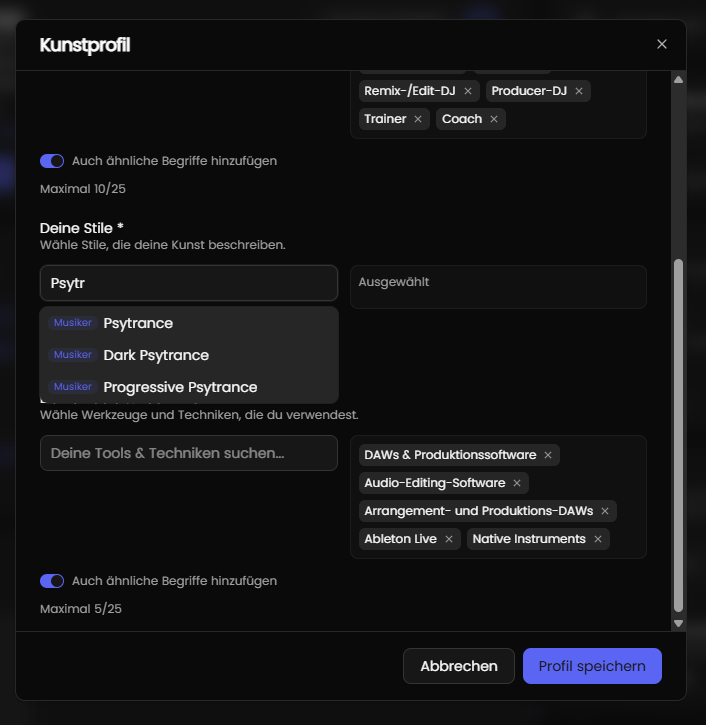
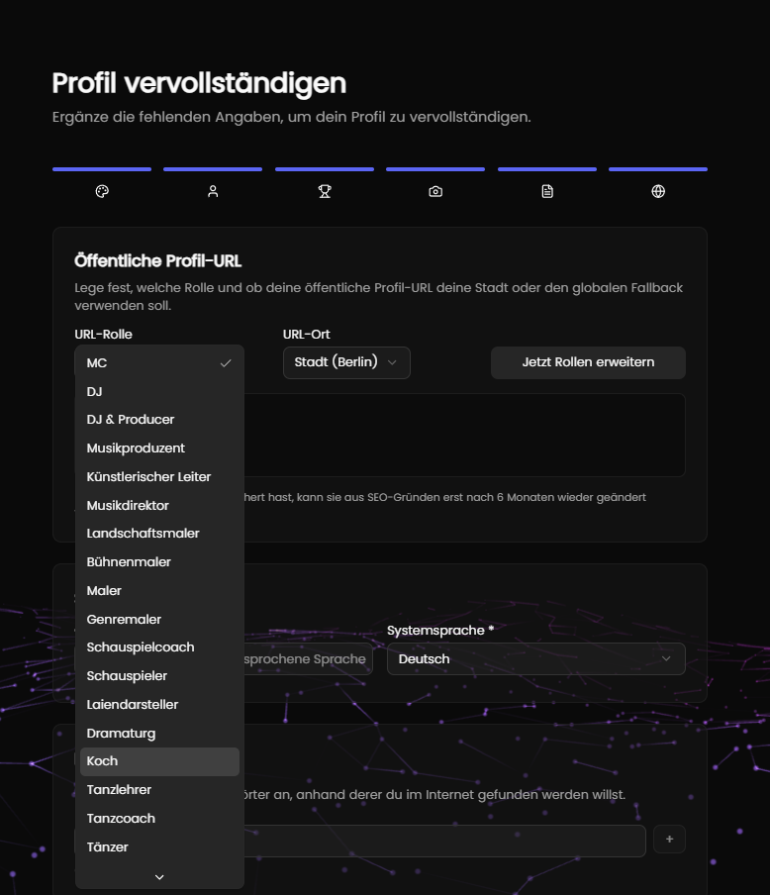
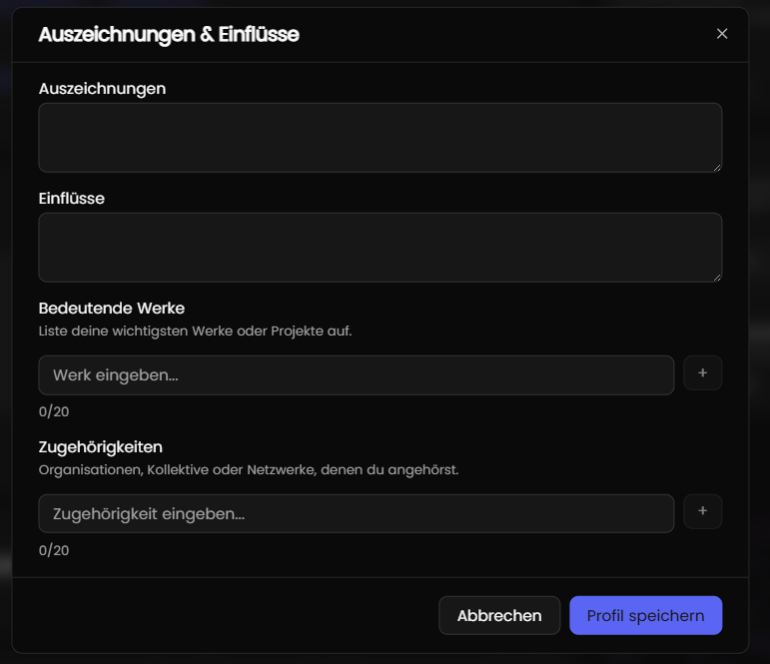
ashoka ritual is available in 12 languages; it features a personal Artist AI Agent as well as individual and group profiles spanning thousands of roles, styles, and tools. The key point is this: encounters should not remain random. What sometimes happens almost casually in everyday life—such as when two trombonists strike up a conversation at a birthday party and immediately find common ground—should become digitally scalable.
This scalability is not an end in itself. It is intended to increase the likelihood that relevant people will find one another. A network does not gain value by generating an infinite number of contacts. It gains value by making the right contacts possible: precise, respectful, culturally sensitive, professionally useful, and humanly sustainable.
Shared practice instead of national pigeonholes
This analogy is at the core of the model. People often understand each other quickly when they share a practice. Two musicians don’t need to have the same political views, the same passport, or the same native language to be able to talk about approach, timing, sound, performance experience, or improvisation. Two painters can connect through pigments, surfaces, light, and composition. Two filmmakers can develop a professional bond through editing, rhythm, camera work, budget, and storytelling that is stronger than abstract differences.
ashoka ritual relies on the idea that shared artistic practice fosters a trust that transcends national and ideological divisions. This practice is concrete. It consists of techniques, decisions, experiences, mistakes, routines, and intuition. Those who share the same practice often grasp what is meant more quickly. This is precisely where the opportunity arises to view migration not as a loss of national belonging, but as an expansion of belonging and as a way out of life situations that initially seem inescapable.
A brand that sustainably connects artists globally must not treat them primarily as representatives of a country. It must take them seriously as bearers of a practice. Origin can be one dimension, but it must never become the primary lens through which we view them.
From an administrative case to an opportunity for new connections
It is precisely here that the concept’s social impact lies. In a present where migration is often framed as an administrative case, a security issue, or a political conflict, ashoka ritual shifts the perspective. Modern migration is understood not merely as a problem, but as an opportunity for new connections. People do not migrate solely because they must; they also migrate because skills, ideas, collaborations, and audiences have become mobile.
A musician in Lagos, a set designer in Leipzig, a dancer in Seoul, a chef in Palermo, and a digital designer in São Paulo can connect with one another more quickly today than previous generations could have begun a correspondence. The question is no longer just where someone lives, but with whom someone can work, learn, perform, experiment, and grow. Whether in a professional context or driven by a hobby, the platform is open to everyone.
Herein lies the strategic core of ashoka ritual: The platform aims to create a global space of possibilities where mobility is understood not merely in geographical terms. Those who are visible, discoverable, and capable of connecting can have an impact beyond physical locations. Modern migration via ashoka ritual thus becomes, for everyone, a catalyst for the activation and movement of skills, relationships, and impact.
Openness to professionals, independent creatives, and emerging identities
ashoka ritual is explicitly aimed not only at established professionals, but also at amateur artists, independent artists, musicians and producers, designers, visual artists, filmmakers, media artists, creative collectives, and cultural innovators. This openness is important because cultural energy rarely comes exclusively from institutions.
Many influential movements first emerge on the margins: in rehearsal spaces, kitchens, studios, backyards, small stages, clubs, workshops, online communities, and temporary collectives. Anyone who conceives of art as a global network must therefore also create spaces where imperfect profiles, emerging projects, and experimental identities are given a chance.
This requires special care. Openness must not mean that quality becomes arbitrary. At the same time, quality must not be defined so narrowly that only already established names become visible. ashoka ritual thus positions itself at a challenging intersection: the platform is low-threshold enough to accommodate new voices, and structured enough to generate genuine relevance.
Visibility as a Prerequisite for Autonomy
ashoka ritual combines this openness with a promise of visibility. Artistic identity should not disappear into national categories, but rather become visible under one’s own name, stage name, or collective profile. This is more than marketing. For many creatives, visibility is a prerequisite for autonomy.
Those who can be found can be booked. Those who can be booked can generate income. Those who generate income from an international network become less dependent on local gatekeepers, funding mechanisms, authorities, social circles, or chance. In this sense, “Modern Migration” is also an economic idea: mobility arises from relationships, and relationships arise from recognizable profiles.
This economic dimension cannot be separated from the cultural mission. Art needs dignity, but also infrastructure. Inspiration needs visibility, but also reliability. International resonance requires not only enthusiasm, but also findable data, understandable profiles, clear roles, and a platform that facilitates connection.
Radical language, clear social responsibility
What stands out about ashoka ritual is the anti-state and anti-political tone of its positioning. Functionally, the social network can help people in difficult life circumstances find “kindred spirits” through art, enabling them to shape their lives independently of state control. Through matching, the system also makes it possible to counteract loneliness, which is a neglected evil in old age for which, in practical terms, there is currently no effective solution.
This language is deliberately radical, sometimes harsh, sometimes provocative. It is directed against war, national vanity, power games, and ideological co-optation. Ethics and responsibility are promoted.
It is precisely this tension that makes the brand authentic from the perspective of the art world: ashoka ritual interprets art as a counter-model to political hardening, generates trust and security, stands for fairness, and ensures clear rules. Paradoxically, boundlessness requires good structures so that it does not tip over into arbitrariness or exploitation.
Ashoka’s story intensifies this responsibility. Anyone who invokes a figure who found ethics after violence and conquest cannot sell freedom as irresponsibility. The brand must conceive of freedom as a mature, solidarity-based, and binding form of action. This is precisely where ashoka ritual’s strength lies: radicalism is not understood as a mere pose, but as a call to design and launch our social, unifying operating system in a more humane, fair, and effective way.
Matching: Putting the Brand Slogan into Practice
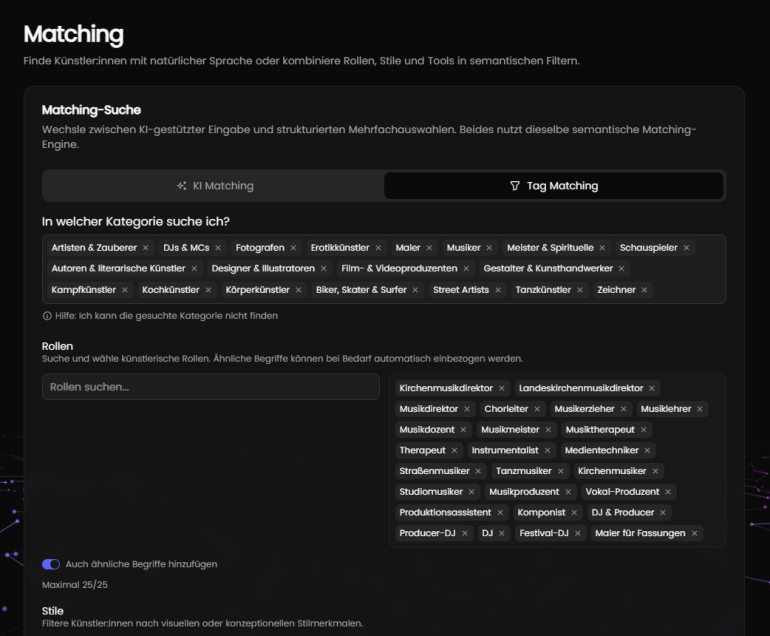
The innovative aspect, therefore, lies not solely in the slogan “no boundaries,” but in the technical and social implementation of this slogan. Role, style, and tool matching are not trivial matters. They can help to intelligently organize the complexity of global creative markets.
A person isn’t simply looking for an “artist,” but perhaps a female VJ with experience in electronic live acts, a traditional musician with stage experience, an illustrator with knowledge of 3D tools, or a collective that can combine performance, body art, and digital installation. The more precise such search and matching structures become, the more likely abstract networking can give rise to concrete collaboration.
This precision is also a central quality and brand promise. Good technology recognizes not just keywords, but connections. It reveals whether people work in similar aesthetic fields, whether their tools are compatible, whether their projects complement one another, and whether contact can actually lead to cooperation. Modern migration therefore requires not only openness, but also intelligent and globally understandable navigation that can be used in a value-adding way even by people with little internet experience.
Twelve Languages and AI: Migration as the Translation of Contexts
Multilingualism is also central. Language is one of the most invisible boundaries. Those who are visible only in one language often remain trapped in a cultural space, even if the internet is technically accessible globally. If dialogues and profiles are to function in twelve languages, then migration is conceived as translation: not just of words, but of contexts.
An artistic profile must be able to explain what someone does, what material, what tradition, what stage, what audience, and what working method are meant. AI can act as a mediator here, provided it handles cultural meanings with sufficient sensitivity and does not force everything into smooth, standardized terms.
At ashoka ritual, AI is therefore not a cold promise of automation, but a mediating tool. The personal Artist-AI Agent can help structure profiles, facilitate dialogues, translate roles, and refine search queries. Yet the core remains human: The machine prepares the encounter; the relationship arises between people.
From Passive Waiting to Active Self-Networking
Modern Migration underscores this claim through its proactive fundamental shift: away from passive dependence, toward active self-networking. The central idea can be understood as an invitation not to let one’s own reality be defined exclusively by state affiliation, origin, or regional boundaries.
Modern migration thus does not mean fleeing from responsibility, but rather expanding responsibility. Those who network globally take responsibility for their own role in the exchange: for communication, reliability, respect, cooperation, and impact. Art becomes a medium through which people can not only present themselves, but actually become useful to one another.
ashoka ritual is not intended to keep people in passive anticipation, but to make them active agents. Profiles, dialogues, matches, and projects become tools for actively shaping one’s life. Visibility is not granted but enabled; connection is not claimed but practically organized.
Hybridity as the Future of Artistic Migration
This opens up opportunities for artists. Those who find no resonance in a local environment can discover allies elsewhere. Those who work with a rare technique can search worldwide for people who understand or complement that technique. Those who work across disciplines no longer have to submit entirely to a single category.
Hybrid art forms in particular—between music production and live performance, between body art and performance, between film, installation, design, and the digital stage—benefit from networks that do not operate according to traditional disciplinary boundaries. Modern migration is thus also a migration between concepts of art.
ashoka ritual is a network where new artistic identities are not treated as exceptions. The platform can make hybrid forms, transitions, and interstices visible. This is not only timely but also defining for the brand: Those who relativize boundaries must also rethink the boundaries between disciplines, formats, and job titles.
ashoka ritual as a blueprint for a culture of connection
The most powerful idea, however, remains the shift in perspective. In ashoka ritual, modern migration is not the story of a person who arrives at a border and asks for permission. It is the story of a person who enters a global arena with a skill, a style, a tool, and an artistic voice.
This field can be political because it relativizes borders. It can be economic because it enables work. It can be spiritual or existential because it creates meaning and a sense of belonging. Above all, however, it is practical: people should find one another, speak, plan, perform, produce, travel, learn, and make an impact together.
Understood in this way, ashoka ritual is a blueprint for a culture of connection. Not every formulation of the positioning will please everyone; some is deliberately sharp, some programmatic, some idealistic. In the future, art will be stronger than the mechanics of borders, status games, and national self-reflection.
Strengthening the brand means: translating the parable into infrastructure
Ashoka’s story reminds us that genuine change must not stop at a message. It must become visible in actions, rules, and repeatable forms. This is precisely where Ashoka and Ritual intersect. One part of the name tells of the ethical shift: from the principle of expansion to the principle of care. The other part describes the social form: repeated action, common ground, shared ownership, ritual.
For ashoka ritual, this gives rise to a strong brand logic. The platform should not merely claim that borders can be overcome. It should enable actions in which this overcoming becomes tangible. Every successful collaboration, every precise match, every translated artist biography, every fair booking, and every international project becomes a small ritual of modern migration.
Outlook: The future begins in the studio, on stage, and in chat
“Modern migration” is thus less a finished state than an invitation. It calls on creatives to expand their sphere of influence not only geographically but mentally. It asks what happens when belonging arises not primarily through origin but through shared practice. And it puts forward a simple, bold claim: Perhaps the future of migration does not begin at the government counter, but in the studio, on stage, in a chat, in a collaborative project.
Perhaps the modern migrant is not just someone who changes locations, but someone who creates connections where others see borders. Perhaps the modern artist is not merely the creator of a work, but the bearer of a practice that can resonate worldwide. And perhaps ashoka ritual is at its strongest precisely where it takes its own name’s history seriously: as an invitation to turn back, to connect, to act together, and to a culture in which art does not merely adorn, but sustains.
Openness to professionals, independent creatives, and emerging identities
ashoka ritual is explicitly aimed not only at established professionals, but also at amateur artists, independent artists, musicians and producers, designers, visual artists, filmmakers, media artists, creative collectives, and cultural innovators. This openness is important because cultural energy rarely comes exclusively from institutions.
Many influential movements first emerge on the margins: in rehearsal spaces, kitchens, studios, backyards, small stages, clubs, workshops, online communities, and temporary collectives. Anyone who conceives of art as a global network must therefore also create spaces where imperfect profiles, emerging projects, and experimental identities are given a chance.
This requires special care. Openness must not mean that quality becomes arbitrary. At the same time, quality must not be defined so narrowly that only already established names become visible. ashoka ritual thus positions itself at a challenging intersection: the platform is low-threshold enough to accommodate new voices, and structured enough to generate genuine relevance.
Visibility as a Prerequisite for Autonomy
ashoka ritual combines this openness with a promise of visibility. Artistic identity should not disappear into national categories, but rather become visible under one’s own name, stage name, or collective profile. This is more than marketing. For many creatives, visibility is a prerequisite for autonomy.
Those who can be found can be booked. Those who can be booked can generate income. Those who generate income from an international network become less dependent on local gatekeepers, funding mechanisms, authorities, social circles, or chance. In this sense, “Modern Migration” is also an economic idea: mobility arises from relationships, and relationships arise from recognizable profiles.
This economic dimension cannot be separated from the cultural mission. Art needs dignity, but also infrastructure. Inspiration needs visibility, but also reliability. International resonance requires not only enthusiasm, but also findable data, understandable profiles, clear roles, and a platform that facilitates connection.
Radical language, clear social responsibility
What stands out about ashoka ritual is the anti-state and anti-political tone of its positioning. Functionally, the social network can help people in difficult life circumstances find “kindred spirits” through art, enabling them to shape their lives independently of state control. Through matching, the system also makes it possible to counteract loneliness, which is a neglected evil in old age for which, in practical terms, there is currently no effective solution.
This language is deliberately radical, sometimes harsh, sometimes provocative. It is directed against war, national vanity, power games, and ideological co-optation. Ethics and responsibility are promoted.
It is precisely this tension that makes the brand authentic from the perspective of the art world: ashoka ritual interprets art as a counter-model to political hardening, generates trust and security, stands for fairness, and ensures clear rules. Paradoxically, boundlessness requires good structures so that it does not tip over into arbitrariness or exploitation.
Ashoka’s story intensifies this responsibility. Anyone who invokes a figure who found ethics after violence and conquest cannot sell freedom as irresponsibility. The brand must conceive of freedom as a mature, solidarity-based, and binding form of action. This is precisely where ashoka ritual’s strength lies: radicalism is not understood as a mere pose, but as a call to design and launch our social, unifying operating system in a more humane, fair, and effective way.
Matching: Putting the Brand Slogan into Practice
The innovative aspect, therefore, lies not solely in the slogan “no boundaries,” but in the technical and social implementation of this slogan. Role, style, and tool matching are not trivial matters. They can help to intelligently organize the complexity of global creative markets.
A person isn’t simply looking for an “artist,” but perhaps a female VJ with experience in electronic live acts, a traditional musician with stage experience, an illustrator with knowledge of 3D tools, or a collective that can combine performance, body art, and digital installation. The more precise such search and matching structures become, the more likely abstract networking can give rise to concrete collaboration.
This precision is also a central quality and brand promise. Good technology recognizes not just keywords, but connections. It reveals whether people work in similar aesthetic fields, whether their tools are compatible, whether their projects complement one another, and whether contact can actually lead to cooperation. Modern migration therefore requires not only openness, but also intelligent and globally understandable navigation that can be used in a value-adding way even by people with little internet experience.
Twelve Languages and AI: Migration as the Translation of Contexts
Multilingualism is also central. Language is one of the most invisible boundaries. Those who are visible only in one language often remain trapped in a cultural space, even if the internet is technically accessible globally. If dialogues and profiles are to function in twelve languages, then migration is conceived as translation: not just of words, but of contexts.
An artistic profile must be able to explain what someone does, what material, what tradition, what stage, what audience, and what working method are meant. AI can act as a mediator here, provided it handles cultural meanings with sufficient sensitivity and does not force everything into smooth, standardized terms.
At ashoka ritual, AI is therefore not a cold promise of automation, but a mediating tool. The personal Artist-AI Agent can help structure profiles, facilitate dialogues, translate roles, and refine search queries. Yet the core remains human: The machine prepares the encounter; the relationship arises between people.
From Passive Waiting to Active Self-Networking
Modern Migration underscores this claim through its proactive fundamental shift: away from passive dependence, toward active self-networking. The central idea can be understood as an invitation not to let one’s own reality be defined exclusively by state affiliation, origin, or regional boundaries.
Modern migration thus does not mean fleeing from responsibility, but rather expanding responsibility. Those who network globally take responsibility for their own role in the exchange: for communication, reliability, respect, cooperation, and impact. Art becomes a medium through which people can not only present themselves, but actually become useful to one another.
ashoka ritual is not intended to keep people in passive anticipation, but to make them active agents. Profiles, dialogues, matches, and projects become tools for actively shaping one’s life. Visibility is not granted but enabled; connection is not claimed but practically organized.
Hybridity as the Future of Artistic Migration
This opens up opportunities for artists. Those who find no resonance in a local environment can discover allies elsewhere. Those who work with a rare technique can search worldwide for people who understand or complement that technique. Those who work across disciplines no longer have to submit entirely to a single category.
Hybrid art forms in particular—between music production and live performance, between body art and performance, between film, installation, design, and the digital stage—benefit from networks that do not operate according to traditional disciplinary boundaries. Modern migration is thus also a migration between concepts of art.
ashoka ritual is a network where new artistic identities are not treated as exceptions. The platform can make hybrid forms, transitions, and interstices visible. This is not only timely but also defining for the brand: Those who relativize boundaries must also rethink the boundaries between disciplines, formats, and job titles.
ashoka ritual as a blueprint for a culture of connection
The most powerful idea, however, remains the shift in perspective. In ashoka ritual, modern migration is not the story of a person who arrives at a border and asks for permission. It is the story of a person who enters a global arena with a skill, a style, a tool, and an artistic voice.
This field can be political because it relativizes borders. It can be economic because it enables work. It can be spiritual or existential because it creates meaning and a sense of belonging. Above all, however, it is practical: people should find one another, speak, plan, perform, produce, travel, learn, and make an impact together.
Understood in this way, ashoka ritual is a blueprint for a culture of connection. Not every formulation of the positioning will please everyone; some is deliberately sharp, some programmatic, some idealistic. In the future, art will be stronger than the mechanics of borders, status games, and national self-reflection.
Strengthening the brand means: translating the parable into infrastructure
Ashoka’s story reminds us that genuine change must not stop at a message. It must become visible in actions, rules, and repeatable forms. This is precisely where Ashoka and Ritual intersect. One part of the name tells of the ethical shift: from the principle of expansion to the principle of care. The other part describes the social form: repeated action, common ground, shared ownership, ritual.
For ashoka ritual, this gives rise to a strong brand logic. The platform should not merely claim that borders can be overcome. It should enable actions in which this overcoming becomes tangible. Every successful collaboration, every precise match, every translated artist biography, every fair booking, and every international project becomes a small ritual of modern migration.
Outlook: The future begins in the studio, on stage, and in chat
“Modern migration” is thus less a finished state than an invitation. It calls on creatives to expand their sphere of influence not only geographically but mentally. It asks what happens when belonging arises not primarily through origin but through shared practice. And it puts forward a simple, bold claim: Perhaps the future of migration does not begin at the government counter, but in the studio, on stage, in a chat, in a collaborative project.
Perhaps the modern migrant is not just someone who changes locations, but someone who creates connections where others see borders. Perhaps the modern artist is not merely the creator of a work, but the bearer of a practice that can resonate worldwide. And perhaps ashoka ritual is at its strongest precisely where it takes its own name’s history seriously: as an invitation to turn back, to connect, to act together, and to a culture in which art does not merely adorn, but sustains.