Art Connects

7 Perspectives on Self-Determination, Cultural Participation, and Understanding with and through ashoka ritual
Sometimes a promising new path begins with a message. Sometimes with a sample, an idea for a trip, or the decision to showcase one’s own work. What connects people isn’t always the same background or the same language. Often, a shared style, a common practice, or simply curiosity about another person’s perspective is enough to positively shape one’s own life. ashoka ritual combines international understanding with authentic, people-centered communication. We hope that, through ashoka ritual’s offerings and approach, we can make a small contribution toward greater humanity and closer ties among people in the future.
That’s exactly where ashoka ritual omes in: This global network of artists makes profiles, interests, and creative skills discoverable across borders. Multilingual dialogs, the search for suitable roles, styles, and tools, as well as the location-based artist radar can facilitate connections. What comes of these connections is shaped by the people involved. The following seven fictional case studies illustrate the various paths that might emerge from such initial contacts.
Overview of the following success stories
I/VII Modern Migration: Arriving as a Human Being After Fleeing
II/VII Career Planning: Developing One’s Own Career Path as an Artist
III/VII Intergenerational Exchange: Returning to the Arts from Passivity as a Retiree
IV/VII Cultural Production: An Ensemble Gets a Stage for an Unfinished Idea
V/VII Social Participation in Old Age: Shared Encounters Instead of Loneliness
VI/VII Tailored Communication: Traveling Together with Like-Minded Partners
VII/VII Peace Dialogue: International Understanding Through Role, Style, and Tool Matching
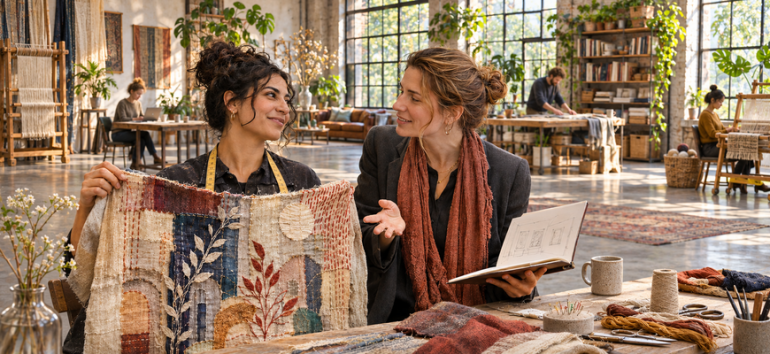
I/VII Modern Migration: Arriving as a Human Being After Fleeing
Samira Finds Artistic Inspiration in Berlin
Life Situation
Samira has left Aleppo and is starting a new life in Berlin. In addition to the many practical challenges of settling in, she is looking for a way to continue her artistic work and meet people who can build on it. She works with embroidery, used fabrics, and memories of places. Her art is part of her story—and at the same time, a skill she hopes to use to reestablish herself professionally.
1 Describe Your Own Work
Samira creates a profile under “ashoka ritual” and describes her materials, themes, and techniques. Autocomplete suggestions and a multilingual AI agent can help her find the right terms and make her work understandable even across language barriers.
2 Making Initial Contact
Nora, a curator in Berlin, is looking for a textile artist for a project on memory and everyday objects. She discovers Samira’s profile and reaches out to her. During their conversation, the two connect as a curator and an artist—not as representatives of predefined stereotypes about their backgrounds.
3 Creating an Impact Together
They develop an exhibition and a paid workshop. Samira gains her first local reference and a new audience; Nora finds a partner whose perspective enriches her project. They clarify fees, image rights, and responsibilities from the very beginning.
What can come of this.
The right connection can help Samira get her career back on track and regain some control over her life. The network facilitates connections; it is not a substitute for legal and social support.
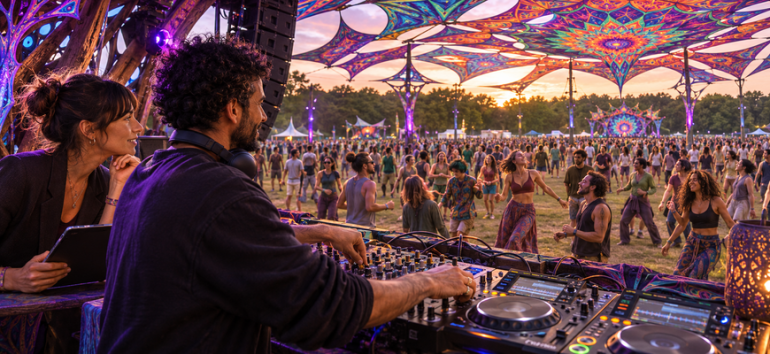
II/VII Career Planning: Charting Your Own Career Path as an Artist
Malik is taking the next step with a performance
Life Situation
Malik is a DJ and producer. He has moved to Berlin and wants to build a career there. To do so, he doesn’t need as many contacts as possible, but rather the right people, performance opportunities, and concrete next steps. He plays electronic sets and is looking for event organizers as well as other DJs whose musical style aligns with his work.
1 Set a Career Goal
In his profile, Malik describes his sound, his experience, and the kinds of gigs he’s looking for. His general desire to gain a foothold in Berlin turns into a concrete plan: to build connections within the local club and event scene.
2 Finding the Right Contacts
Malik is looking for a DJ in Berlin and discovers an event organizer who puts on electronic music nights and is the booker for the Antaris Festival. They discuss their musical interests and plan an event together.
3 Turning the First Gig into a Career Path
Malik records his set, updates his profile to include this new experience, and uses this material to reach out to other venues. The event organizer gains an artist who expands her lineup; Malik gains stage experience, references, and contacts in his new city.
What Can Grow From This
Networking becomes part of concrete career planning: setting a goal, finding the right contacts, showcasing one’s work, and developing further opportunities from a successful collaboration. Through conversations and the right connections on ashoka ritual, he’s getting to know the psytrance genre better and could become one of the resident DJs at the Antaris Festival.
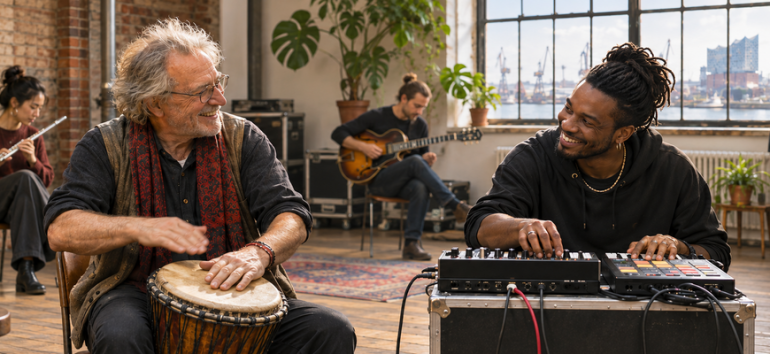
III/VII Intergenerational: Returning to Art Out of Passivity as a Retiree
Emil combines experience with a new generation
Life Situation
Emil is an experienced percussionist who has lived in Hamburg for many years. After a long, quiet period, he would like to start playing music regularly again and contribute his experience to new projects. Kofi, a younger producer, is looking for acoustic percussion for his electronic live sets.
1 Highlighting Skills and Interests
Emil describes his musical practice and explains that he’s looking for performance opportunities and collaboration. Kofi describes which timbres and instruments could complement his productions.
2 Striking Up a Conversation Through Shared Musical Interests
The two get to know each other through their musical interests and arrange a rehearsal. Emil brings a sense of rhythm and stage presence; Kofi contributes studio experience and new production ideas.
3 Starting a Collaboration
The rehearsal leads to a joint set. Later, the two lead a workshop for young people and perform at a local event. Emil returns to the stage more regularly; Kofi develops a distinctive sound and gains an experienced partner.
What Can Grow From This
Emil is not only invited but is needed as a co-creator. Kofi gains access to experience that transforms his own work. In this way, an encounter gives rise to an artistic exchange from which both benefit.
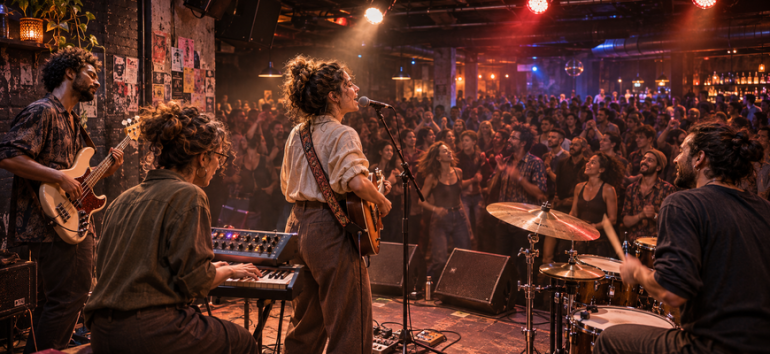
IV/VII Cultural Production: An ensemble is given a stage for an unfinished idea
The “Morgenfenster” Collective
Life Situation
Four young artists want to collaborate, but they don’t yet have any institutional contacts or a finished production. They have an idea, but the roles, resources, and an initial stage still need to be developed. A photographer, a musician, an actress, and a digital designer are developing a project about life spent moving between different places.
1 Establishing a Group Identity
The four members create a joint collective profile. They describe what each brings to the table and what support they still lack.
2 Filling in the Gaps in Experience
An experienced set designer discovers the profile. She is well-versed in adaptable spaces and small production budgets and helps the group develop a feasible installation based on their individual contributions.
3 Realizing Their Own Production
The collective presents the work in a small cultural space and documents the production. This results in a shared portfolio that the group can use to pitch their work to other venues. The four members learn to organize their project independently; the set designer shares her expertise and gains new perspectives for her own practice.
What Can Grow From It
Support has a lasting impact when it not only enables production but also passes on knowledge and autonomy. In this way, a rough idea can become a project that continues to grow on its own.
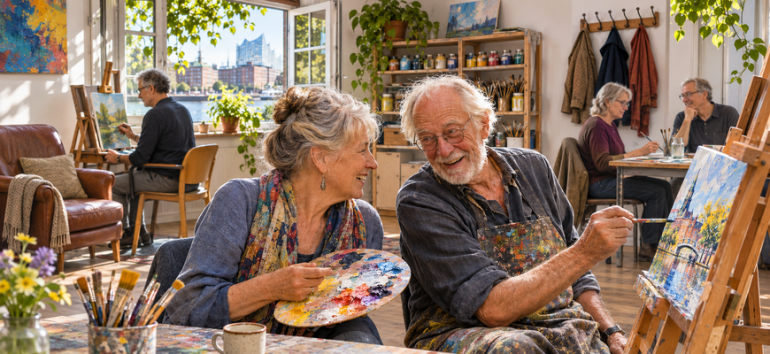
V/VII Social Participation in Old Age: Shared Experiences Instead of Loneliness
Helmut Makes Friends Through Shared Interests
Life Situation
Helmut is 74 years old and lives alone. He is interested in painting and classical music, but knows only a few people in his community with whom he can share these interests. Digital platforms are unfamiliar to him; lengthy forms and technical terms make it difficult for him to get started. He doesn’t simply want to be looked after; rather, he wants to find people with whom he can do things on a regular basis and to whom he can contribute something himself.
1 Start with Your Own Interests
Helmut begins with just a few details. Autocomplete suggestions can offer suitable roles, styles, and interests without him needing to know the exact technical terminology. Cross-language matching can bring people with similar interests together.
2 Discover people nearby
Using the Artist Radar, Helmut finds an amateur painter in his area who also enjoys visiting museums. They first arrange to visit a museum together.
3 An encounter turns into a regular routine
After that, they meet regularly to paint and invite others who are interested. Helmut gains a community and a purpose; the group gains an attentive conversation partner and a shared activity.
What Can Grow From This
Shared interests provide a natural starting point for an initial conversation. Regular meetings foster a sense of familiarity, and being able to contribute something oneself strengthens a sense of autonomy and belonging. Digital matching cannot automatically eliminate loneliness, but it can make the first step toward a meaningful connection easier.
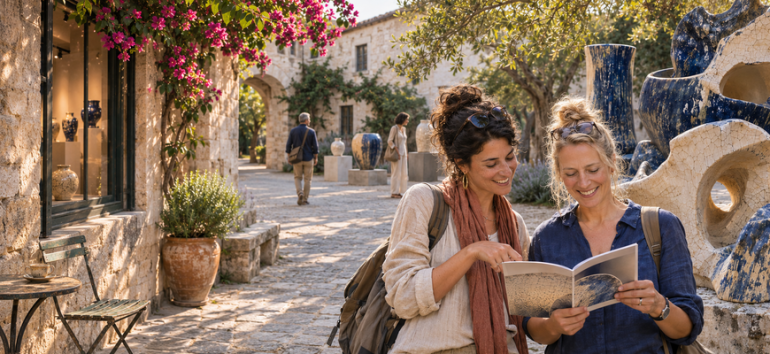
VI/VII Communication That's Just Right: Traveling Together with Partners in the Same Spirit
A shared space becomes a travel group
Life Situation
Mara and Juliane live in different cities. Both are interested in ceramics, small art venues, and hiking. They’d love to travel, but would prefer to do so with someone with whom they’ve already developed a sense of connection before setting out.
1 Identify Shared Interests
In their profiles, they discover similar interests and travel preferences. They have a concrete starting point for conversation without having to struggle to find things in common.
2 Getting to Know Each Other at Their Own Pace
Mara and Juliane message each other, talk on the phone, and initially meet at a local ceramics workshop. Their digital connection turns into a personal acquaintance.
3 Planning a Trip Together
A few months later, they travel together to a ceramics biennial and then go hiking through the region. They already know each other’s interests and plan the trip together.
What Can Grow From This
Visible commonalities can shorten the path from strangers to friends. A journey should be based on getting to know one another and clear agreements, digital contact can be the starting point, but the decision to move forward is made by the people themselves.
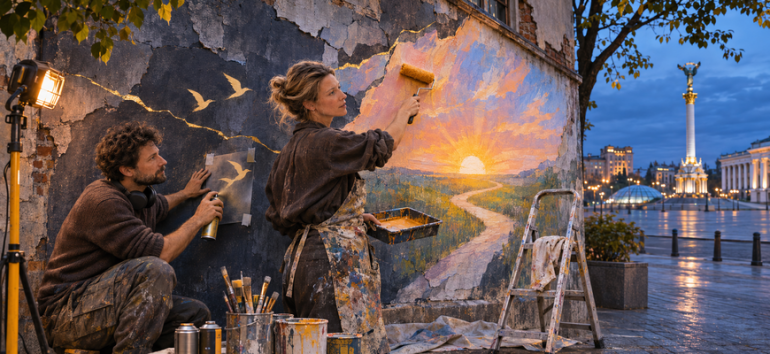
VII/VII Peace Dialogue: International Understanding Through Role, Style, and Tool Matching
Oksana and Ilya Meet Beyond the Flags
Life Circumstances
Against the backdrop of wars, artistic exchange between people from both countries can send a powerful message, provided it occurs voluntarily and does not blur the lines between different experiences and responsibilities.
A Scene from Life
Oksana, a Ukrainian graphic designer, lives in Warsaw. Ilya, a Russian sound artist, lives abroad and has taken a stand against the war. Both draw on personal memories and are interested in how art can express what is difficult to put into words.
1 Finding Common Ground Through a Shared Practice
Oksana and Ilya discover that they work on similar themes but use different artistic media. Multilingual dialogues and the search for shared interests and working methods facilitate an initial exchange.
2 Respecting Perspectives and Boundaries
Before collaborating, both discuss what they’d like to talk about and what should remain private. Oksana is under no obligation to speak for all Ukrainians or to engage in reconciliation. Ilya is viewed as an individual artist, not as a representative of a state. The war and its consequences are not downplayed in this process.
3 Creating a Joint Work
They develop a digital exchange of graphics and sound pieces exploring memory, loss, and the possibility of continuing to be creative despite everything. The work is presented in multiple languages. It does not end a war, but it does make possible an encounter in which two people perceive one another as artists and individuals.
What Can Grow From This
Artistic exchange can open up a space for dialogue without erasing political differences or responsibilities. International understanding does not begin by forcing people to reconcile, but by treating them as human beings. Participation remains voluntary.
Contact Turns into a Relationship
The seven stories begin in very different life situations: upon arrival after fleeing, while planning a career, when returning to one’s own practice, while building a collective, in the desire for community, while searching for a travel companion, and in dialogue across national borders.
What they all have in common is that first step: people make visible what they can do, what interests them, and what kind of connection they’re seeking. ashoka ritual can help you discover the right connections and start the conversation. Lasting value is created when something concrete grows out of it—a fair booking, a collaborative project, regular meetings, a trip, or a conversation that opens up new perspectives.
If you’re an artist, are building a collective, or simply want to meet people with similar interests, start with what makes you unique. Describe your practice, your skills, and your interests in a way that others can connect with. Use the multilingual profile and communication features, and be sure to specify what you’re looking for or what you can offer.
Create your profile on ashoka ritual and bring your work into a network that aims to facilitate connections across languages, places, and disciplines. The next step doesn’t have to be a big one: a conversation, a joint rehearsal, a local visit, or an idea you’ve been carrying on your own until now.
Visibility is a start. Connections grow when people listen to one another, collaborate reliably, and work together to create new opportunities for action. Perhaps your next artistic or personal development will begin with this very first contact.